
Most of us do not struggle to feel grateful. We struggle to interrupt the day long enough to say it.
That is how a thank-you becomes a thought we keep postponing. We remember the neighbor who brought in the bins, the colleague who quietly fixed a difficult problem, the friend who stayed on the phone when the evening went bad. We mean to send something. Then the moment passes, and the message starts to feel awkwardly late.
It is worth recovering the habit. Not because every kindness needs a ceremonial response, and not because a card can repair every relationship. A thoughtful thank-you matters because it turns private appreciation into usable information: I noticed what you did. It helped. It was not invisible.
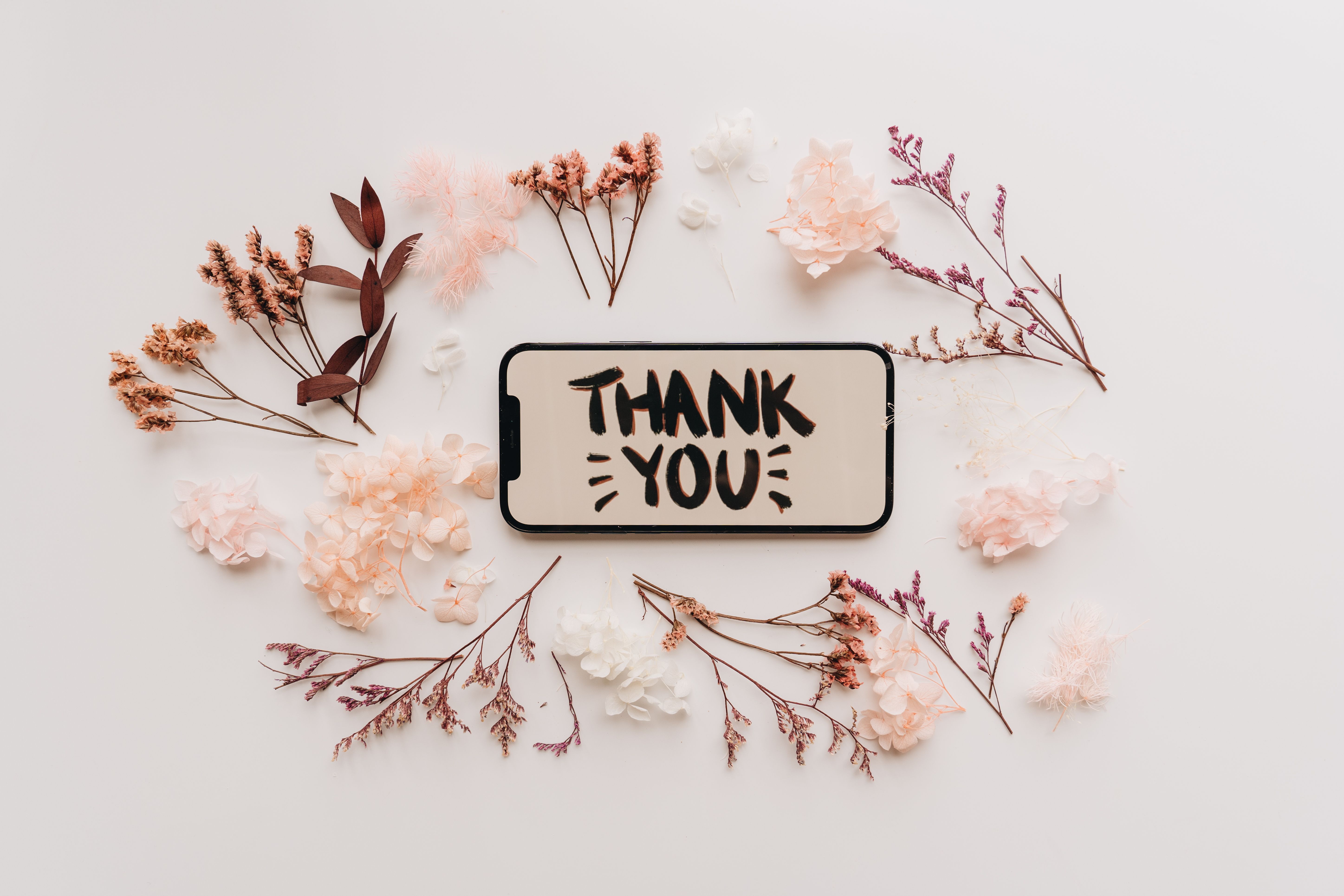
The problem is rarely ingratitude. It is hesitation.
People often hold back because they think the recipient already knows. If your sister knows you appreciate her, why spell it out? If your employee knows their work mattered, why send another note? The hidden assumption is that gratitude has value only when it communicates new information.
Research suggests that assumption is wrong. In a series of experiments published in Psychological Science, Amit Kumar and Nicholas Epley found that people who wrote gratitude letters underestimated how positive recipients would feel. The writers also overestimated how awkward the letters would make people feel. In other words, the sender’s self-consciousness was a poor forecast of the receiver’s experience.
That finding explains a familiar failure mode: we edit the note in our heads until it sounds grand enough to justify sending, then send nothing. The recipient is usually not grading the prose. They are registering the effort and the fact that someone took the trouble to name what mattered.
A card is a small record of attention
A “thank you” spoken in passing can be warm and perfectly adequate. A card does something different: it gives appreciation a physical or digital place to remain. The recipient can put it in a drawer, pin it near a desk, save it in a message thread, or return to it on a difficult day.
That does not make paper automatically more sincere. A handwritten card has texture, delay, and visible effort. A digital card has speed, accessibility, and a better chance of reaching someone while the kindness is still fresh. A message sent five minutes after a friend helps you may be more meaningful than a beautiful card that arrives six weeks later.
My view is simple: specificity beats stationery. The medium shapes the feeling, but the sentence does most of the emotional work. “Thanks for everything” is pleasant and forgettable. “You noticed I was overwhelmed and handled the client call without making me ask” gives the recipient something real to keep.
If you want visual help without turning the message into a generic greeting, a thoughtful thank you card design can provide the frame. The important part is what you add inside it: the detail that proves the card was meant for this person, not merely selected for the occasion.
Digital gratitude is not a consolation prize
There is a persistent hierarchy in which handwritten is “real” and digital is somehow lesser. That is too neat. A screen can carry a rushed broadcast message, but it can also carry a carefully considered paragraph, a voice note, a photograph, or a card made for one person. A paper envelope can hold a heartfelt note, but it can also hold a preprinted sentence signed in a hurry.
A 2022 study in Affective Science compared private gratitude letters, one-to-one text messages, and public social-media thanks in a preregistered intervention involving 916 undergraduate students. The gratitude activities improved several measures relative with a control activity, and the students who texted their thanks directly to another person reported the biggest gains in social connectedness and support.
That does not prove that texting is better than handwriting in every situation. It does show why dismissing digital thanks as shallow is a mistake. Directness matters. Privacy often matters. The message’s care matters more than whether it crossed the room in an envelope.
What makes a thank-you land?
The strongest notes tend to contain three modest ingredients:
- Name the act. Say what the person did, rather than praising their personality in general.
- Explain the effect. Tell them what changed for you: a task became manageable, a difficult day felt lighter, or a decision became clearer.
- Let the thanks stand alone. Do not immediately attach a request, apology, sales pitch, or counter-favor.
For example: “Thank you for staying late to check those figures. I caught the error before the meeting, and your calm approach stopped me from spiraling.” That is not ornate. It is useful. It tells the other person exactly what their effort accomplished.
Timing helps, but perfection is not a prerequisite. If the thanks is late, acknowledge that briefly and continue: “I should have said this sooner.” Do not spend the entire card apologizing for the delay. The purpose is appreciation, not a second occasion for self-reproach.
When a card is the wrong tool
Thank-you notes can become performative when they are sent because etiquette demands evidence of good manners rather than because the sender has something to say. They can also create pressure when a person is grieving, overwhelmed, or expected to answer a flood of messages. In those moments, a short, no-reply-needed text may be kinder than a formal card.
There is another limit worth keeping in view: gratitude is not a substitute for fair pay, an apology, accountability, or practical help. A card should not be used to decorate an unresolved problem. “Thank you for your patience” does not make repeated lateness respectful; “I appreciate all you do” does not replace giving someone the resources to do it.
The best thank-you is proportionate. A quick message for a small kindness. A longer letter for a life-changing favor. A private note when the moment is intimate. A public acknowledgment only when the other person would genuinely welcome the attention.
Send the imperfect version
The evidence does not say that a card will transform your life, and gratitude research has limits. Effects are often modest, some studies rely on relatively specific participant groups, and the research does not establish that handwritten cards are universally superior to digital ones.
It does support a more practical conclusion. We routinely underestimate how good it feels to be recognized, and we overestimate how embarrassing it will be to do the recognizing. That is a cheap error to correct.
Write the card. Send the message. Use ordinary words and one true detail. The lost art of saying thanks was never really about paper, ink, or elaborate design. It was about refusing to let a meaningful act disappear without a witness.